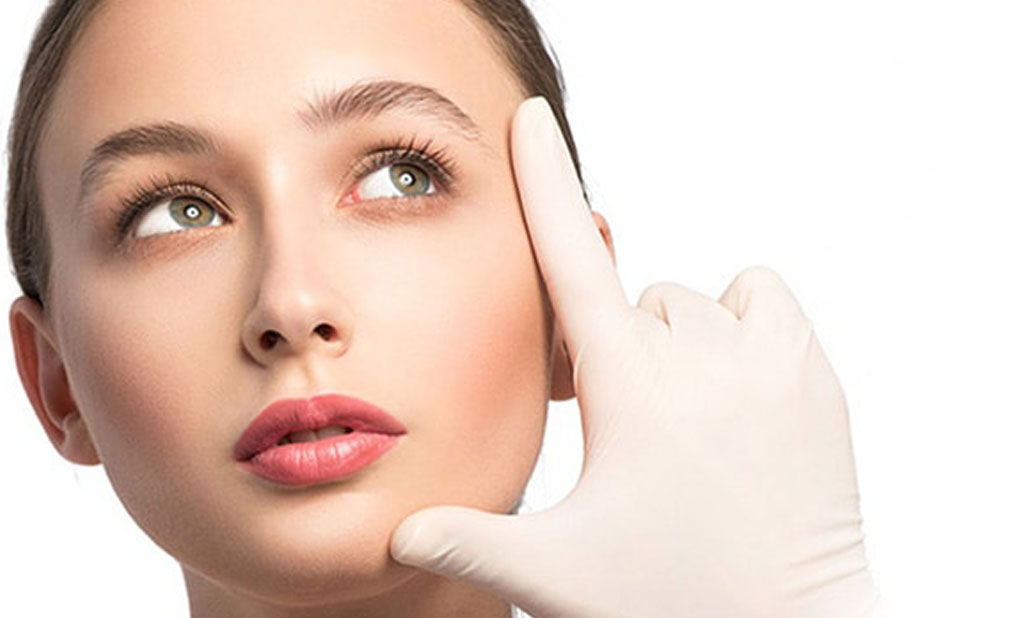
Permanently relaxed

According to the predisposition and position of our facial muscles, sooner or later more or less pronounced wrinkles appear on the forehead and between the eyebrows.
You have certainly already heard of the so-called “frown lines”. Why do they have this name? Look at yourself in the mirror and look angry. These are the forehead wrinkles that make us look so tense when they persist even when the face is relaxed.
Treatment of the upper facial area with botulinum toxin is very safe and effective. Targeted injections of small quantities of the active substance act on the muscles so that the forehead wrinkles are no longer so prominent or are even no longer visible.
Dr Pavicic places great importance on your muscles, and thus also your expression and appearance, not becoming “blocked” or even “paralysed”, but only relaxed – botulinum toxin is a muscle relaxant! Therefore, the dose and the treatment areas are planned according to the strength of your muscles and expression and in line with your expectations. The top priority is that you feel happy and that your natural facial expression is preserved or restored.
The result of the treatment is fully visible after a few days. According to the location and dose, the effect wears off slowly over the next 3-6 months and the treatment can be renewed.
Smooth out wrinkles with hyaluronic acid
Injection of hyaluronan in addition to injection of the botulinum toxin may prove useful during the treatment of strongly pronounced wrinkles.
This is the case, for example, when constantly repeating expressive movements as well as the additional loss of moisture and connective tissue fibres causes the skin at this site to be “broken” and the forehead wrinkles remain visible even without the influence of the muscle.
Dr Tatjana Pavicic is a specialist in combined treatments and places great importance on recommended a treatment for you that can achieve the desired results and takes into account the special situation of your skin.
Related topics
Laser treatment face: what are the options?
LED Facial: Does the special light therapy do anything for the skin?

Facelift Tapes: Can wrinkles really be taped away?

Collagen stimulation: how your skin can tighten by itself

Whimsical beauty treatments: the fire mask
Volume building in the face

Cosmeceuticals: When cosmetics meet medicine
Custom wrinkle treatments: individual combination treatments for facial rejuvenation

What is the best treatment for forehead wrinkles?
Questionable beauty trend “dermaplaning”
What are the types of wrinkles and how can they be treated?

Generation “Selfie”: Social media influences customer wishes

Trends in cosmetic surgery: minimally invasive procedures

Gifting beauty treatment for Christmas?

3 beauty treatments for winter
What can hyaluronic acid do?
Fractional laser for gentle and effective skin rejuvenation