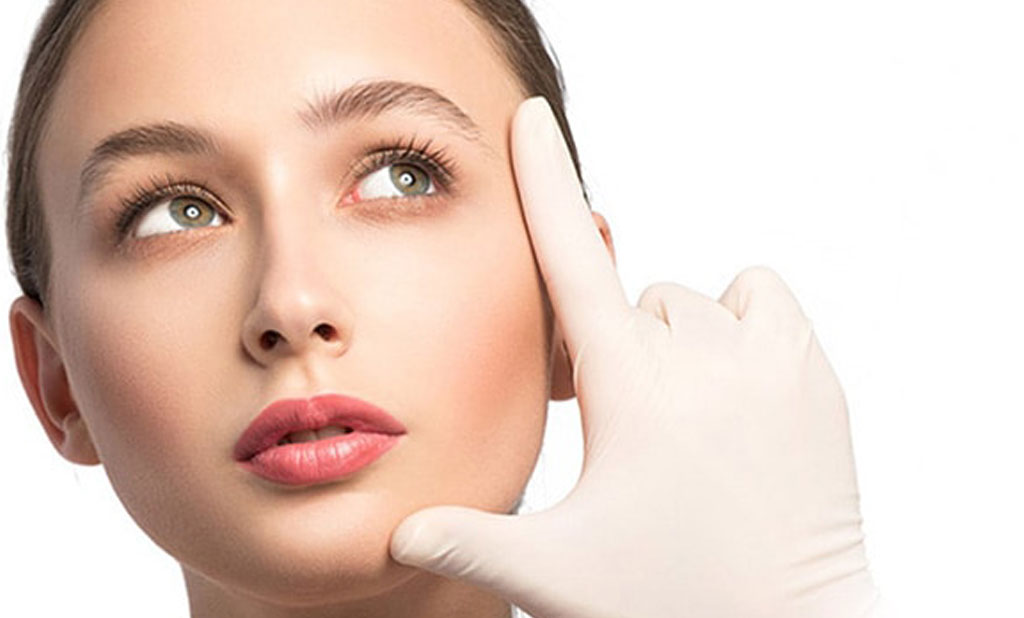
Wrinkle treatment with BTX

Botulinum toxin (colloquially “Botox”) is a medicine that has been used successfully in therapeutic medicine for more than 30 years. Unfortunately, botulinum toxin has fallen into disrepute with the press and the public – unjustly.
Botulinum toxin is used medically at high doses in medicine, even in children, to treat diseases with excessive muscle activity (spasms). In aesthetic medicine, we use this positive relaxing effect to relax muscles that cause the unwanted wrinkles.
In Germany, three preparations are approved for aesthetic treatment, which means they have been investigated in numerous clinical studies and found to be effective and safe. Only such preparations should be used.
Most importantly, of course – botulinum toxin type a to fight wrinkles
Since the start of the 1990s, botulinum toxin type A has been used very successfully in the treatment of wrinkles caused by facial expressions. It is injected into the muscles that are involved in wrinkle production and causes a transient relaxing of the muscles. This smooths out expression-related wrinkles.
The face appears younger and fresher, with its natural expression being maintained. A knowledge of anatomy and an understanding of the complex interplay between our muscles is essential in this matter. Thus, for example, four muscles pull the eyebrows downwards and only one raises them. If the only lifter is weakened too much, the eyebrows will slip downwards and the eyes will appear small, on the other hand if the ABC of the muscle interplay is mastered, a wonderful momentum is achieved and the eyes appear fresher, brighter and larger.
Trust in an experienced therapist
You know the horror pictures in the media of “Hollywood” beauties, who have allegedly lost their good looks because of Botox. This is only partially true. The majority of Botox treatments would not be recognised in daily life.
This shows the difference in the treatment approach. Dr Tatjana Pavicic uses botulinum toxin type A in a targeted manner, for example to relax certain muscle and thus achieve optimisation of the facial features. The highest priority is to retain your natural expression. Smiling is permitted and wanted, only the creases should simply not go in so deeply!
Dr Tatjana Pavicic is an internationally recognised speaker on the topic of wrinkle treatment and botulinum toxin, because she has set herself the goal of showing that natural combined treatment with botulinum toxin and hyaluronic acid can lead to natural and individual results.
Therefore you should only entrust your beauty to an experienced therapist.

Small cost – great effect
Each successful wrinkle treatment requires a high level of experience and a reliable knowledge of the anatomical structures. Your treatment is as individual as you are. Dr Tatjana Pavicic therefore places great importance on precise analysis of your facial expression and any asymmetries that may exist, since also these can be effectively treated with BoNTA.
We will go through your medical history with you and obtain a complete picture of your face and your wishes. Thus we can suggest a treatment programme that is individually tailored for you.
Targeted wrinkle correction for a natural, youthful appearance
1. Simple
- Practically painless
- No anaesthesia required
2. reliable
- Test clinically many times.
- Used medically for years.
- Very well tolerated
3. effective
- Quick and long-lasting results
- Natural results
- Effective in wrinkle prevention
FAQ
Questions?
According to a survey by the DGBT (German Society for Aesthetic Botulinum Toxin Therapy), many patients are hesitant about treatment with BoNTA because they fear dependency, a rigid facial expression or long-term damage. These concerns are largely based on insufficient information about wrinkle treatment with botulinum toxin A.
It is important that anti-ageing treatment with BoNTA is performed by an experienced physician. At our private practice for dermatology and aesthetics in Munich, Dr Tatjana Pavicic has extensive expertise in wrinkle treatment with botulinum toxin and is an internationally recognised speaker and practitioner in this field. Particular emphasis is placed on natural-looking, individual results.
Botulinum toxin A acts at the junction between nerves and muscles. The active substance reduces the release of the neurotransmitter acetylcholine, which is involved in transmitting the nerve impulse that tells a muscle to contract. Repeated or prolonged muscle contraction, for example when concentrating or squinting, can contribute to the formation of expression lines. BoNTA can reduce this muscle activity and thereby soften the associated wrinkles.
No. This is a common misconception. An injection with BoNTA is intended to relax the treated facial muscles rather than completely paralyse them. As the muscle activity decreases, expression lines can become smoother.
Many patients, particularly those who have never had botulinum treatment before, worry that they may develop an unnatural or expressionless face or lose the ability to move individual areas.
Such an effect is possible in principle if it is deliberately requested or if an unnecessarily high dose is used. This can produce a mask-like appearance.
However, this is not an inevitable consequence of BoNTA treatment. The result depends on a dose that is adapted to the individual anatomy, muscle strength and facial expression, as well as on the skill, anatomical knowledge and aesthetic judgement of the treating physician. With an experienced practitioner such as Dr Tatjana Pavicic, the aim is a relaxed, natural appearance rather than a frozen expression.
The name botulinum toxin derives from the Latin word “botulus” for sausage and the Greek word “toxikon” for poison. The historical term “sausage poison” goes back to the physician Justinus Kerner, who around 1820 identified a link between paralysis-related deaths and the consumption of spoiled food. In nature, botulinum toxin is produced by the bacterium Clostridium botulinum.
Seven types of botulinum toxin are known. In aesthetic medicine, type A is used. It is produced biotechnologically, highly purified and injected only in very small, precisely dosed quantities into selected muscles. The pharmaceutical preparation used for aesthetic treatment is therefore fundamentally different from uncontrolled exposure to naturally occurring bacterial toxin.
Some patients are concerned that botulinum toxin has not been studied for long enough and might cause long-term damage.
Botulinum toxin has been used in medicine since the 1970s. Physicians use it, for example, to treat muscle spasms and spasticity in children and adults, migraine, teeth grinding and other medical conditions. It can also be used to reduce excessive sweating. In aesthetic wrinkle treatment, there is now more than 30 years of clinical experience.
Botulinum toxin has therefore been used for many years in both medical and aesthetic indications. Within this experience, no characteristic pattern of delayed permanent damage from appropriately performed treatment has been established.
Because the word botulinum toxin is sometimes associated with poisons, drugs or medicines, some patients worry that it could be addictive. Botulinum toxin itself does not cause physical dependency.
What may encourage patients to repeat treatment is simply that they like the fresher appearance achieved after a BoNTA treatment.
Wrinkle treatment with BoNTA is generally well tolerated, but there are situations in which treatment should not be performed. These include known intolerance to components of the preparation, pregnancy and breastfeeding. Particular caution is also required in patients taking medication that affects blood clotting, as this can increase the risk of bruising.
We will be happy to advise you individually on whether BoNTA treatment is suitable for you.
The first effects are usually visible around two to four days after the BoNTA injection. The full effect generally develops within approximately two weeks after treatment.
Botulinum toxin is not a permanent wrinkle treatment. Depending on the treated area, the dose and the individual strength of facial movement, the muscle-relaxing effect generally lasts around three to six months. After this, repeat injections can be performed if desired.
In practice, treatment intervals can sometimes become longer over time because patients may unconsciously reduce certain habitual facial movements, such as repeated frowning.
Sweating is a normal bodily function and increases, for example, during hot weather or physical exertion. Some people, however, sweat excessively even without significant exertion. This may indicate hyperhidrosis.
Botulinum toxin can reduce excessive sweating by acting on peripheral nerve endings that use acetylcholine to activate sweat glands. BoNTA blocks this signal transmission at the treated sites and can therefore reduce sweat-gland activity.
The result is a marked reduction in sweating. This approach can be used for excessive sweating of the armpits, palms and soles of the feet.
Related topics
LED Facial: Does the special light therapy do anything for the skin?

Face Cupping: Does cupping help against wrinkles?

Facelift Tapes: Can wrinkles really be taped away?

Injecting lips: How long does hyaluronic acid last?
Custom wrinkle treatments: individual combination treatments for facial rejuvenation

What is the best treatment for forehead wrinkles?

What are the types of wrinkles and how can they be treated?

Gifting beauty treatment for Christmas?

How effective is BTX against hyperhidrosis?

Heavy sweating: At what point is it hyperhidrosis?